The Pre-Pour Concrete Checklist: What Every Site Engineer Must Verify Before Signing Pour Cards
Essential QA/QC Protocols for Formwork Stability, Rebar Spacing, and Concrete Slump Verification

Pavishan Sivakumaran
Civil Engineer & Construction Project Manager • BCU MSc CPM Candidate
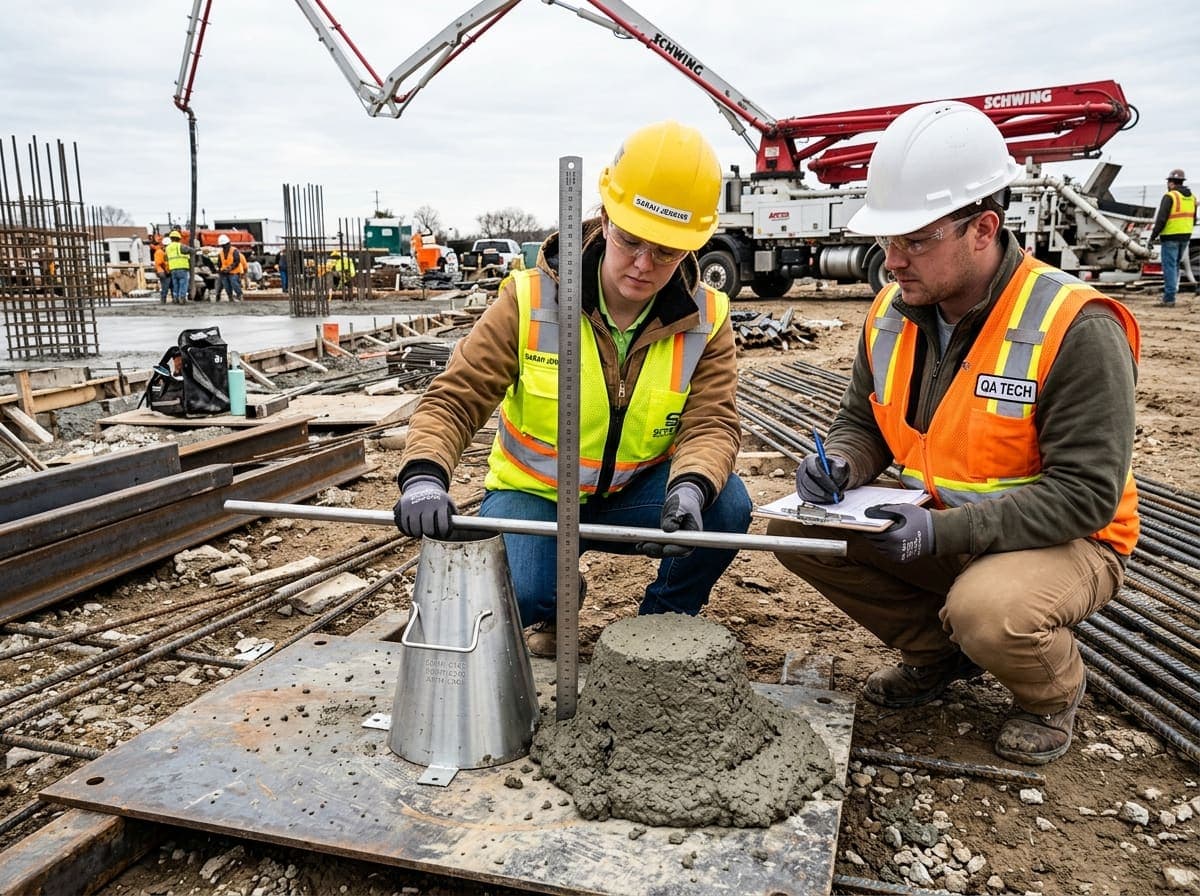
Pouring concrete is irreversible. Once the mixer discharge chute opens, remedying structural mistakes becomes extraordinarily costly. Here is the exact field checklist I deploy across multi-storey framed structures.
1. Formwork Rigidity and Cleanliness
Before looking at rebar, inspect the shuttering. Formwork must resist dynamic hydrostatic pressure during wet concrete placement and vibratory compaction. Check prop spacing, diagonal bracing, tie-rod tightness, and ensure cleanout openings at the base of column forms are blown clear with compressed air.
Never permit concrete pouring over sawdust, tie-wire offcuts, or standing rainwater, which create weak shear planes at structural joints.
2. Reinforcement Clearance & MEP Sleeves
Check that electrical conduits, plumbing pipe sleeves, and lightning conductor tapes are secured firmly so they cannot float or shift during pouring. In critical moment-resisting beam-column joints, ensure aggregate can pass freely through rebar spacing without honeycombing.
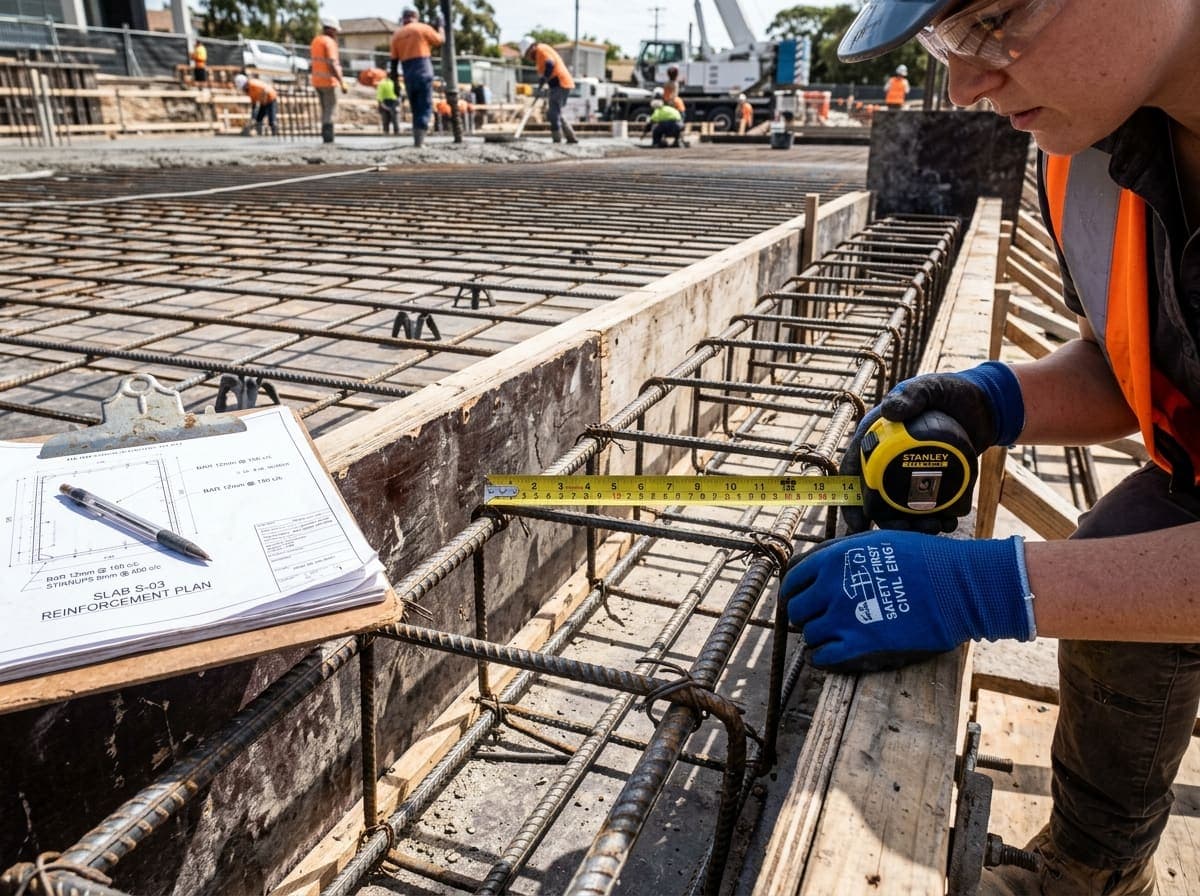
Concrete cover must be checked with a caliper or template against the structural detail (minimum 25mm for slabs, 40mm for external columns and ground beams).
- True slump test verification (e.g. 100mm ± 25mm for pumpable ready-mix concrete).
- Sampling at least 6 standard 150mm compression test cubes (3 tested at 7 days, 3 tested at 28 days).
- Verification of batch plant delivery tickets (water-cement ratio, cement type, retarder dosage).

Pavishan Sivakumaran
Graduate Civil Engineer & Construction Project Manager with 2+ years on-site QA/QC, structural supervision, and commercial NRM2 cost controls across UK and Sri Lankan developments.
Related Technical Insights
Practical Material Control & Rebar Waste Minimization on Multi-Storey RC Sites
6 min read • Jan 18, 2026
Bridging Civil Engineering & Quantity Surveying: How SMM7 / NRM2 Transforms Site Delivery
7 min read • Dec 14, 2025