Structural & Foundation Design Considerations for 400 kW+ Industrial Solar Sheds
Engineering Clean-Energy Infrastructure Over Active Commercial and Industrial Facilities

Pavishan Sivakumaran
Civil Engineer & Construction Project Manager • BCU MSc CPM Candidate
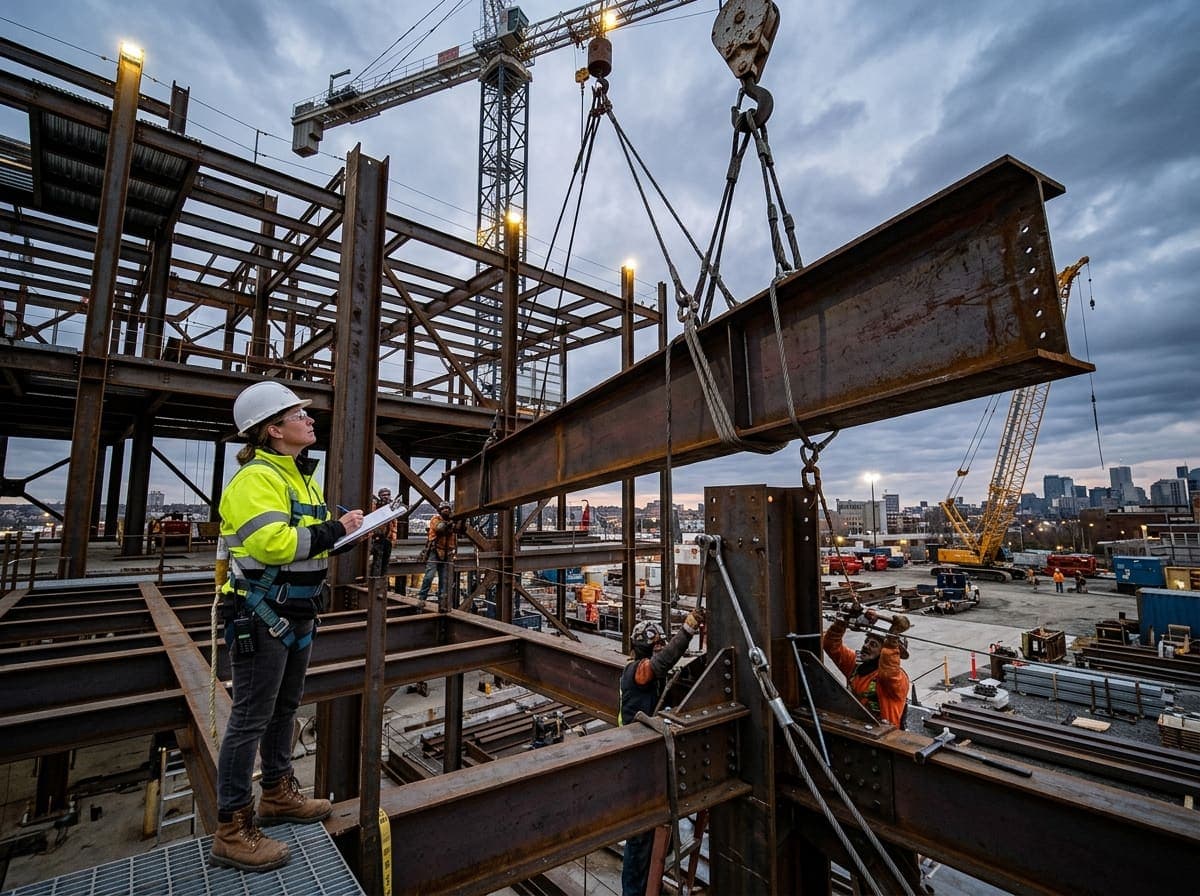
Renewable energy canopies experience severe wind uplift forces that traditional roofs never face. Insights from our 400 kW solar canopy installation on anchor bolt design, corrosion protection, and logistics.
1. Understanding Wind Uplift and Dynamic Wind Actions
Unlike enclosed buildings where gravity dead loads dominate foundation sizing, elevated open-sided solar canopies act like airplane wings during severe windstorms. Wind suction creates intense upward overturning moments on foundation anchor bolts.
During our 400 kW Solar Panel Shed project with V.V. Ramanathan & Company, foundation footings were engineered with heavy reinforced concrete deadweight and deep shear keys to resist lateral sliding and uplift simultaneous load combinations.
2. Hot-Dip Galvanizing & Corrosion Mitigation
Because solar installations are designed for a 25+ year lifespan exposed to tropical rainfall and atmospheric pollutants, structural steelwork requires hot-dip galvanizing with minimum 85-micron coating thickness per BS EN ISO 1461.
Galvanized connection bolts must be torqued using calibrated torque wrenches and touched up with zinc-rich cold galvanizing paint wherever site drilling or lifting scuffs occur.

Pavishan Sivakumaran
Graduate Civil Engineer & Construction Project Manager with 2+ years on-site QA/QC, structural supervision, and commercial NRM2 cost controls across UK and Sri Lankan developments.
Related Technical Insights
Practical Material Control & Rebar Waste Minimization on Multi-Storey RC Sites
6 min read • Jan 18, 2026
Bridging Civil Engineering & Quantity Surveying: How SMM7 / NRM2 Transforms Site Delivery
7 min read • Dec 14, 2025